
How to Read the Midrash? The Rambam’s Approach
The study of Midrash is one of the most fascinating experiences in Jewish tradition. In it, one discovers astonishing accounts, powerful images, unexpected parables, and sometimes even descriptions that seem to contradict the laws of nature or ordinary logic. For a modern reader, these passages can provoke a certain unease. Should they be understood literally? Are they simply imaginary accounts intended to impress the reader? Or is a deeper wisdom hidden behind these images?
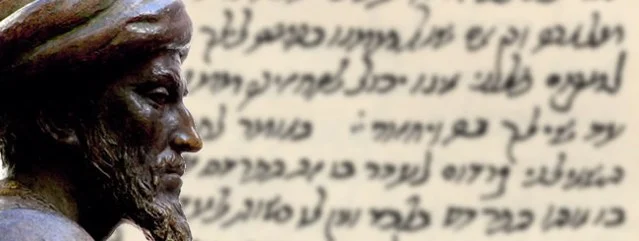
These questions are not new. Already in the Middle Ages, they were raised with force. To answer them, it is essential to turn to one of the greatest intellectual authorities of Judaism: Rabbi Moshe ben Maimon, better known as Maimonides or the Rambam (1138-1204). In his introduction to the chapter Helek of the tractate Sanhedrin, the Rambam proposes a real method for understanding the Aggadah, that is to say, the non-legal accounts and teachings of the Sages of the Talmud and the Midrash. This approach remains today a fundamental key for any serious reader of the Midrash.
The Three Profiles of Readers
The Rambam begins by describing three types of readers when faced with the words of the Sages.
The first is what one could call the naive literalist. This person reads every account literally. They think they are honoring the Sages by accepting everything without asking questions. But paradoxically, explains the Rambam, this attitude ends up producing the opposite effect. By refusing to recognize the symbolic or metaphorical dimension of the texts, the reader gives the impression that the Sages believed in impossible or absurd stories. Instead of preserving their intellectual greatness, he involuntarily reduces them to irrational storytellers. For the Rambam, this approach is a serious error, because it distorts the real depth of the rabbinic tradition.
The second type of reader adopts an opposite attitude but relies on the same error. He too takes the accounts in a literal sense. But instead of accepting them, he mocks them. He concludes that the Sages were simple men, influenced by the popular beliefs of their time. This skeptical reading often believes itself to be rational and modern. Yet, according to the Rambam, it reveals above all a lack of intellectual depth. Because this reader remains a prisoner of the surface of the text. He sees the husk, but never seeks the fruit.
The third reader, the one whom the Rambam considers the true seeker of wisdom, adopts a different approach. He starts from a fundamental principle: the Sages of Israel were masters of exceptional intelligence. When they use strange images, fantastic descriptions, or symbolic accounts, it is not out of naivety but by pedagogical intent. The language of the Midrash is a coded language. Behind every image hides a philosophical, moral, or spiritual idea. The reader’s work therefore consists of seeking the deep meaning concealed behind the narrative form.
Why Do the Sages Use Metaphors?
One can then ask a simple question: why didn’t the Sages express these ideas directly, in a clear and philosophical language? Why go through parables, stories, and images that are sometimes confusing?
The Rambam explains that this choice is profoundly pedagogical. The Midrash is designed as a language accessible at several levels of understanding. A child can read a story and retain a strong image or a simple moral lesson. But a more advanced student, or a reader who returns to the text with more experience, will progressively discover much deeper dimensions. In other words, the Midrash grows with the one who studies it.
This method is, moreover, not an invention of the Sages of the Talmud. It is part of the very tradition of the Bible. The Tanakh frequently uses metaphors, visions, and parables to transmit spiritual truths. King Solomon, considered the wisest man in biblical history, himself chose this language. The Proverbs are full of symbolic images, and the whole Song of Songs is a great allegory of the relationship between God and Israel.
Truth vs. Factuality: The Key to the Midrash
To understand the Midrash, it is therefore essential to distinguish between two notions: fact and truth.
A fact is objective information. For example, knowing the exact time or the date of an event is a fact. This type of knowledge is useful, but it does not necessarily transform the human being.
The truth, on the other hand, touches the essence of things. A parable can describe a situation that never existed historically, and yet reveal a profound truth about human nature, the relationship between God and the world, or the moral structure of reality. In this sense, a parable can sometimes be truer than a simple historical fact, because it highlights a universal and timeless principle.
This is precisely the role of the Midrash. The accounts of the Sages are not just stories. They are tools for reflection. Each detail, each image, each dialogue can be understood as a door leading toward a deeper idea.
Conclusion: A Study Beyond the Letter
Reading the Midrash according to the spirit of the Rambam therefore requires a certain intellectual discipline. One must resist the temptation of superficial reading, whether it be naive or mocking. One must accept that the Torah and the rabbinic tradition speak on several levels simultaneously. The letter of the text is only the first layer of a much broader teaching.
Studying the Midrash in this way transforms reading into a true exploration. The text becomes a territory filled with symbols, clues, and paths for reflection. Each passage can open toward a new understanding of the Torah, the world, and the human soul.
Keeping in mind the teaching of the Rambam, the reader discovers that the Midrash is not a collection of strange stories, but a vast library of wisdom. Behind the images and parables hides an intellectual and spiritual depth that continues to inspire generations.
To study these texts is to enter into the thousand-year dialogue of the Sages of Israel and learn to see, behind the words, the treasures of thought they have carefully concealed for those who truly seek to understand.