

MIDRASH RABBAH
Midrash Shemot Rabbah – Exodus Rabbah
Full English translation accompanied by an educational summary. 620 pages of study and commentary
Intended for both Jewish and non-Jewish readers
Order the paper version
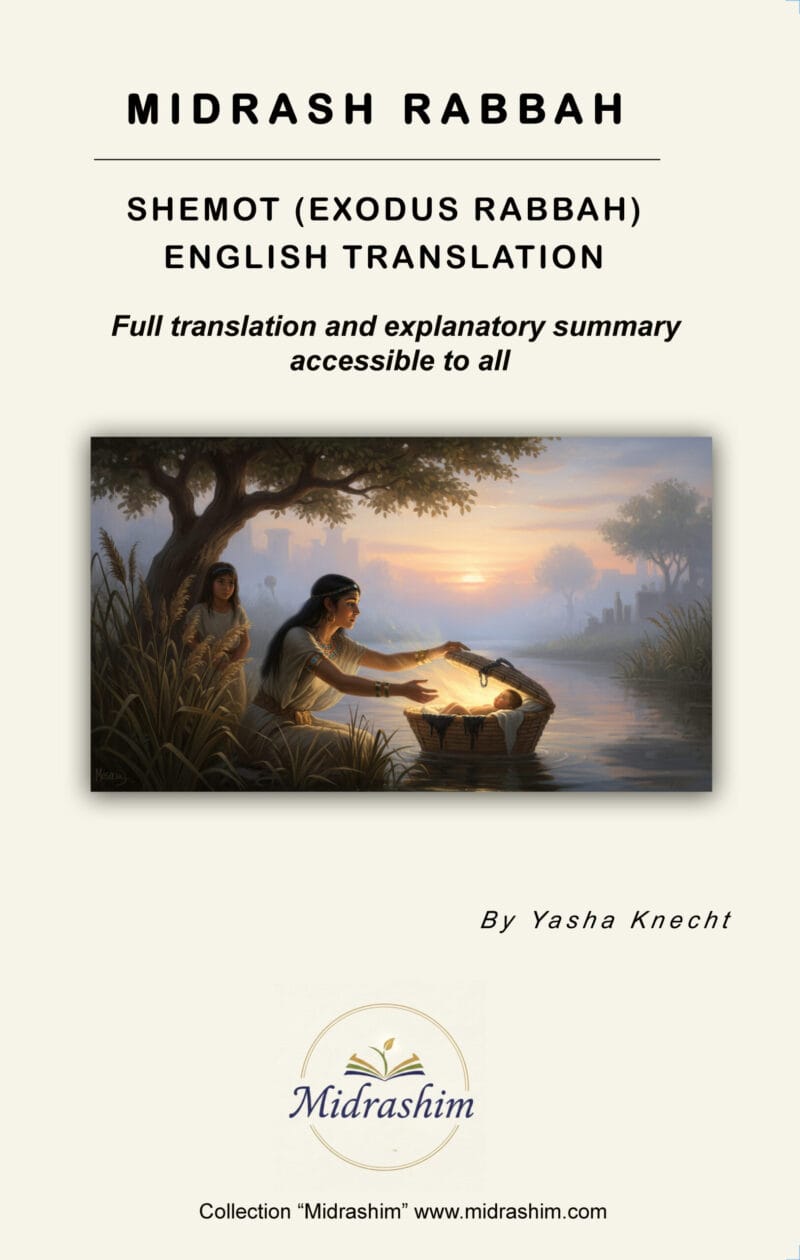
Why read Midrash Exodus Rabbah today?
Because it illuminates the foundations of the biblical narrative, enriches the understanding of the text, and opens a profound intellectual and spiritual perspective.
Discover the style before you buy
📄 PDF version – immediate download
Discover the style before you buy
Discover the style before you buy
📘 Paperback Book Version
Receive the complete work in its printed, bound, and carefully formatted edition.
A 620 pages volume designed for in-depth study, structured reading, and long-term reference. A tangible medium, ideal for annotation, personal work, and your library.
👉 High-quality professional printing 👉 Direct international delivery 👉 A reference work to keep
📥 Complete PDF version
Immediate download
Integrated search
Unlimited reading
📱 Full ePub version
- Instant download
E-reader compatible
Mobile optimized format
The Midrash Rabbah explained and made accessible to the English-speaking reader
The Midrash Rabbah
Midrash Rabbah is among the most foundational texts of Jewish thought. Yet, it remains largely unknown to the contemporary English-speaking reader.
Not because it is obscure, but because it speaks a demanding language: that of depth, allusion, and moral responsibility.
This book does not offer an academic edition of Shemot Rabbah.
It seeks neither critical exhaustiveness nor academic neutrality.
Its objective is simpler and more direct: to transmit.
Shemot Rabbah
is not a marginal commentary on the Book of Exodus.
It is, in a way, its inner conscience.
Where the biblical text recounts events, the Midrash questions intentions, choices, and silences.
It asks not only what happened, but also who deserves deliverance — and under what conditions.
That is why the narrative of the Exodus goes far beyond the history of Israel in Egypt.
It speaks of:
• servitude and power
• institutional violence
• threatened identity
• responsibility in the face of injustice
So many deeply relevant themes.
The translation proposed here prioritizes clarity and readability, while remaining faithful to the intention of the Sages.
Each midrashic unit is accompanied by:
• a summary
• an interpretive key
in order to allow the reader to enter the logic of the Midrash, and not remain on the surface of its images.
In Shemot Rabbah, deliverance does not begin with miracles.
It begins when a man accepts to see the suffering of others, without being compelled to.
Everything else follows from this.
May these pages allow the English-speaking reader (Jewish or not) to find therein not only knowledge, but also guidance.
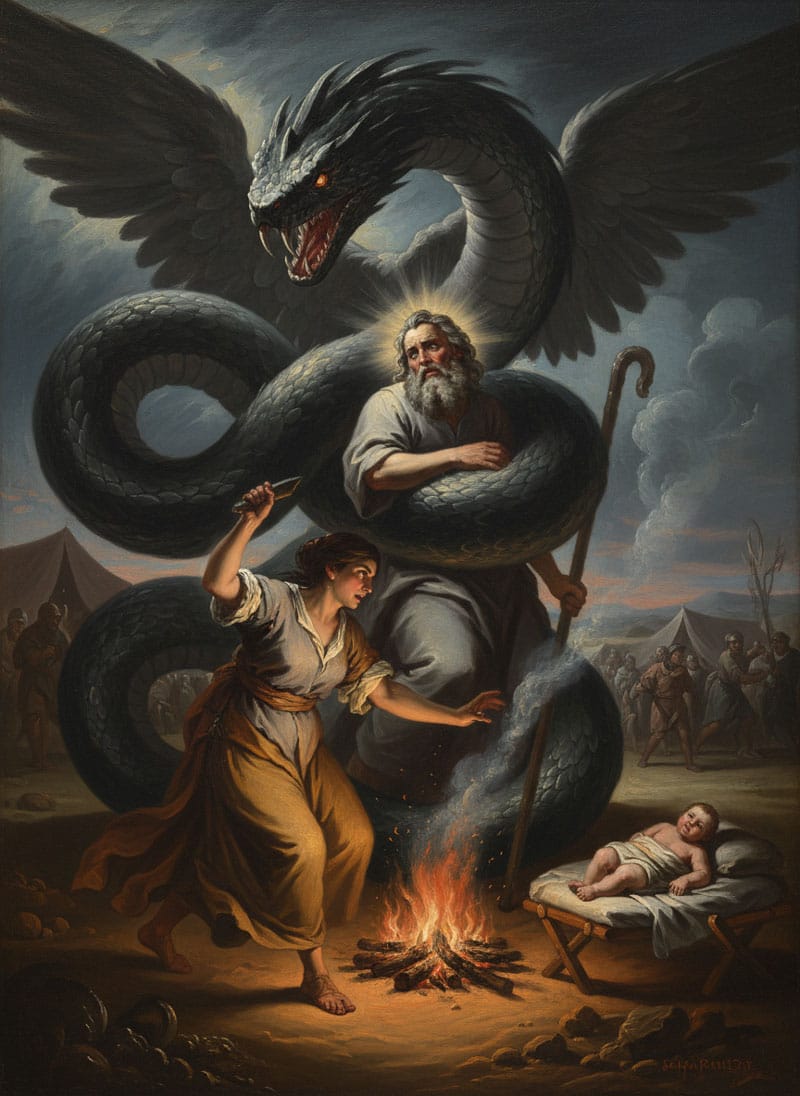
Historical and Philosophical Introduction to the Midrash
The Midrash is one of the oldest and deepest forms of Jewish thought. Born from the need to transmit the Torah beyond simple literal reading, it constitutes a living method of interpretation, developed by the Sages between late antiquity and the beginning of the Middle Ages.
Midrash Shemot Rabbah (Exodus Rabbah) belongs to the corpus of Midrashim Rabbah, homiletic commentaries centered on the five books of the Torah. It does not seek to explain the text as an academic commentary would, but to reveal its moral, spiritual, symbolic, and existential dimensions.
Philosophically, the Midrash rests on a fundamental idea:
the Torah is infinite in meaning, and each generation is called to extract from it a light suited to its time. The biblical text is not frozen in the past; it dialogues with man, his crises, his hopes, and his history.
In Shemot Rabbah, the narrative of the Exodus becomes more than a historical event: it is a universal key to understanding freedom, oppression, human responsibility, and the relationship between God and history.
Midrashim Collection
👉 Explore the first chapter (out of 52) and the table of contents before switching to the full version.
🎁 Read an excerpt from the book
👉 Before buying, discover the first chapter (out of 52) as well as the table of contents
💻 Read online – HTML version - Immediate access
Discover an excerpt of the book directly in your browser.
This version includes two complete chapters and the table of contents.
No download required, smooth reading on computer and smartphone.
👉 Access the excerpt
📄 PDF Version – instant download
Instant access, readable on computer, tablet, or smartphone.
Perfect for flexible viewing, with text search and digital note-taking.
👉 Free download
Same content as the full book.
📱 eBook Version – instant download
Readable on computers, optimized for smartphones, tablets, e-readers, and eBook apps.
Reflowable text, automatic adjustment of font size, maximum reading comfort.
Opens with Apple Books or Google Play Books
👉 Free download
Same content as the full book.
Order the book
📘 Paperback Version
Receive the complete work in its printed, bound, and carefully formatted edition.
Printed edition of 620 pages in 14×22 cm format.
Designed for in-depth and lasting reading.
👉 High-quality professional printing
👉 Direct international delivery
👉 A reference work to keep
📥 PDF Version
Download the book in its full version in PDF format.
Ideal for structured reading, annotation, printing, or personal archiving.
Layout faithful to the original edition.
👉 Instant download after payment
👉 High-quality file
👉 Permanent access
📱 ePub Version
Format optimized for e-readers, smartphones, and tablets.
Flowing text with automatic font adjustment, night mode, and chapter navigation.
Compatible with Apple Books, Google Play Books, and all eBook applications.
👉 Immediate download
👉 Comfortable reading on all devices
👉 Permanent access

Yasha Knecht
About the Author
Born in 1961 in Switzerland, Yasha Knecht has devoted himself for many years to the study and transmission of the Torah. After a course of study in Europe, he moved to Israel in 1989 where he continues his teaching and research work.
Since the early days of the Internet, he has published commentaries on the Parashat HaShavoua and articles on Jewish thought intended for a wide audience. His approach aims to make fundamental texts accessible without reducing their depth.
This book is part of this approach: to offer a clear, structured reading faithful to the sources, capable of enlightening our generation.
Yasha Knecht
About the Author
Born in 1961 in Switzerland, Yasha Knecht has dedicated himself for many years to the study and transmission of Jewish texts. Very early on, he sensed that these sources do not only constitute a cultural heritage, but a living wisdom destined to enlighten every generation.
After a course of study in Europe, notably in Paris, he continued his journey in Israel where he settled in 1989. This stage marked a decisive turning point: study became a commitment to transmission and clarification.
From the early days of the Internet, he has published commentaries on the Parashat HaShavoua as well as articles on Jewish thought intended for a wide audience, both Jewish and non-Jewish. His work is rooted in a deep conviction: the Torah has universal reach and must be presented with rigor, clarity, and fidelity to the sources.
This book is the culmination of many years of research and transmission. It is part of a simple but demanding approach: to make foundational texts accessible without simplifying their depth, and to propose a structured reading capable of entering into dialogue with the contemporary world.